Blog

Dan Klyn interview with Richard Saul Wurman

· Michael Angeles

IA instructor and author of the forthcoming book "Now That I See It" interviewed Richard Saul Wurman to discuss architecture and design, IA roots in library and information work, and the work of making the complex clear.

One thing that I latched onto is Wurman's contention that his success working with the design of information systems and structures comes as a result of acknowledging his ignorance. "Grasp your life as an ignorant person," he says. Most of us, in our arrogance are unwilling to do that. He also notes that the importance of doing this was selfishly motivated by his desire to explore and find patterns that help with this need for making things clear, but it starts with acknowledging this knowledge gap.

This idea resonates with me largely because that's how I feel approaching new projects every time, and that's why this blog exists--Konigi means "to make known"--to find what others have shared, understand them, and share that knowledge. Secondly, it seems similar to what Paula Scher discusses in her TED talk about ignorance--that the ignorance of the new is what has led her to her most innovative moments. There's something powerful in that idea shared by these exemplars of design.

Check out Klyn's blog for the full interview.
http://danklyn.com/blog/?p=459

Is Information Architecture Dying?

· Michael Angeles

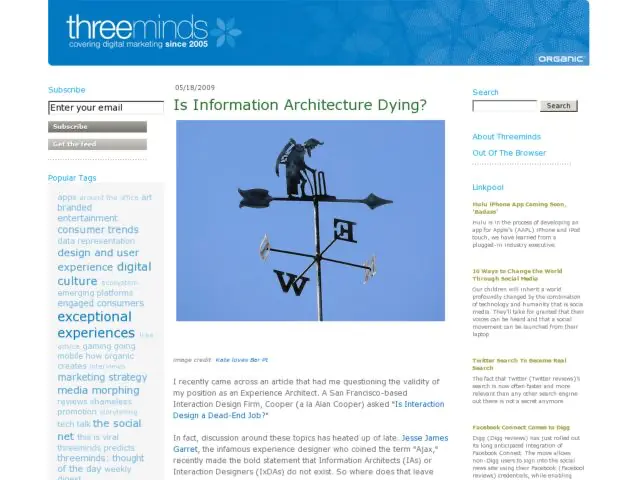
Anthony Viviano at Organic asks if Information Architecture is dead, continuing the discussions about the inclusiveness and expanding scope of IA vis-a-vis UX, and hopping on the question about interaction design being a dead end job. Clearly, he doesn't think the practice and craft of IA is dead, just as the craft of Interaction Design is clearly alive. But the role is changing, and while the navel gazing gets resoundingly loud around defining things, the definition of the shifting roles and responsibilities in the field is meaningful.

http://threeminds.organic.com/2009/05/is_information_architecture_dy.html

User Experience Sketches Flickr Group

· Michael Angeles

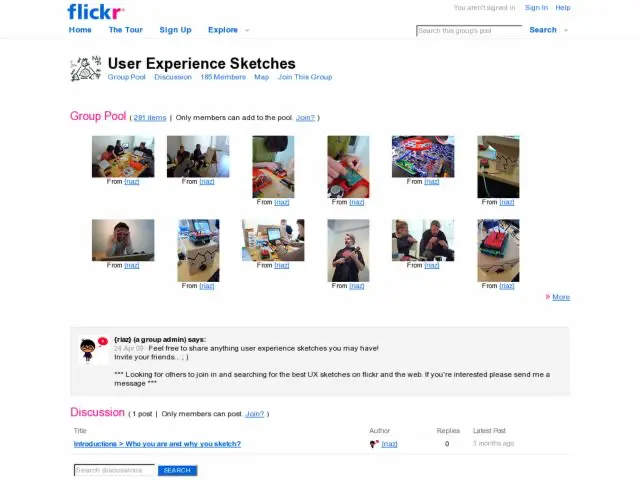
New UX sketch group on Flickr.

This group is a collection of user experience sketches from a variety of designers solving a various problems from all around the world.

A sketch is
1. Unpreciousness : Sketches are not precious and can destroyed to make room for more ideas.
2. Quick : Sketches don’t take days to make. They are fast as we are fast.
3. Useful : UX sketches lead to solutions. While doodling is immense fun for the purposed to ux sketching we are going to collection sketches that are means to an end.

Sketches can include
- Paper sketches
- Software sketches
- Form sketches
- Electronic sketches
- Video Sketches

http://www.flickr.com/groups/uxsketches/

The Value of Paper Prototyping

· Michael Angeles

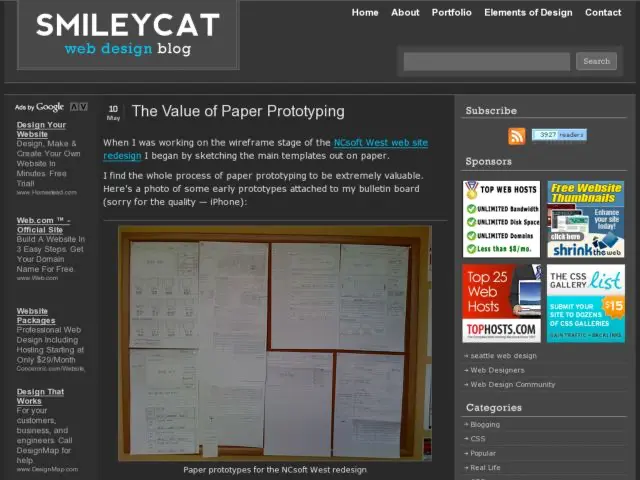
Christian Watson discusses how he uses paper prototypes, showing a photo of a recent project he worked on.

Rather than sketch the whole page on a sheet of paper, I prefer to draw out the various components of the page, cut them out, and Blu-Tack them to the paper. This makes it easy to change different elements, switch them around, etc, without having to redraw the whole page each time.

Sketching out and adding individual components in this way enabled me to quickly come up with a general template layout. I then went back to particular features about which I had more concrete ideas and drew them out in more detail.

...

Another really helpful feature of paper prototypes — as long as you have them visibly attached to your wall — is that you get to look at them every day. I found this to be invaluable for letting the wireframe 'sink in' so that I could view it and review it multiple times a day and make sure that I was happy with it.

Can't agree more about the benefit of having them taped up to the walls too look at every day. I do this with everything and it helps to see things out of the corner of my eye, or from a distance with some regularity. It's a way of "living with" ideas, in order to assess their usefulness over time.

While I was reading this, I ended up searching for photos of my own paper prototypes and found this photo I took of a paper prototype I worked on a few years ago. I remember also enjoying the act of taping vellum modules to pages and moving them around with teams and test participants. I think it also feels more fun and participative working with disposable ideas that way.

http://www.smileycat.com/miaow/archives/001561.php

AlternativeTo: App comparison site may be useful for competitive research

· Michael Angeles

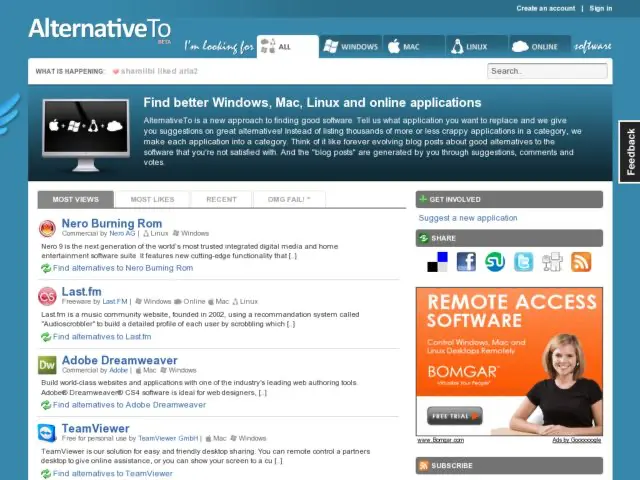
AlternativeTo might be an interesting tool when doing competitive research. The new site describes itself as a a way to find better Windows, Mac, Linux and online applications by submitting the app you want to replace. It's a community site that relies on user submissions, so the number of alternatives is limited in some areas. Having a look at the Basecamp alternatives, for instance, only shows MS Project and the RedMine web app when I looked. But more popular app suggestions are abundant, e.g. alternatives to MS Word.

This could be a good resource with time for collecting examples to reference when doing a competitive study for a web app. One to watch.

http://alternativeto.net/

Should Design Be Held Back by a Tyranny of Data

· Michael Angeles

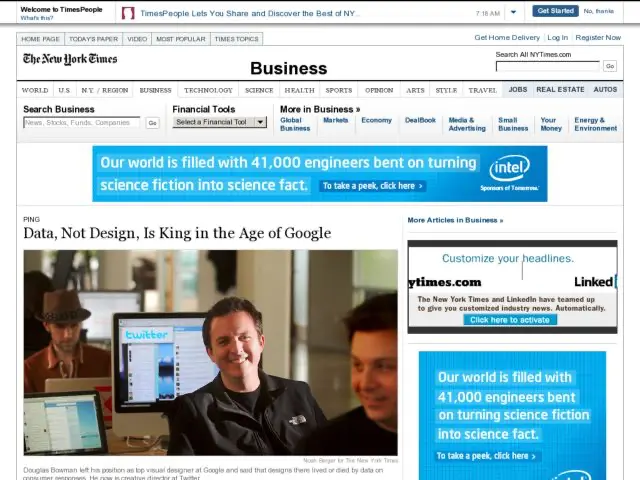
The NYTimes interviewed Doug Bowman to talk about his departure from Google, which Bowman wrote about on his blog in March. Bowman came onto Google as their first Visual Designer 3 years ago, and left in March. Some quotes from the article:

Bowman on Google:

“Data eventually becomes a crutch for every decision, paralyzing the company and preventing it from making any daring design decisions,”

Bowman on Twitter, where he is now Creative Director:

He has also found a new way to listen to customers: reading their tweets in reaction to the new design features.

“Using data is fundamental to what we do,” Mr. Bowman said. “But we take all that with a grain of salt. Anytime you make design changes, the most vocal people are the ones who dislike what you’ve done. We don’t just throw the numbers in a spreadsheet.”

Deborah Dunn, associate professor at the Stanford Institute of Design:

Adhering too rigidly to a design philosophy guided by “Web analytics,” Ms. Dunn said, “makes it very difficult to take bold leaps.”

“It is more from engaging with users, watching what they do, understanding their pain points, that you get big leaps in design,” Ms. Dunn said.

http://www.nytimes.com/2009/05/10/business/10ping.html

Journal of Information Architecture

· Michael Angeles

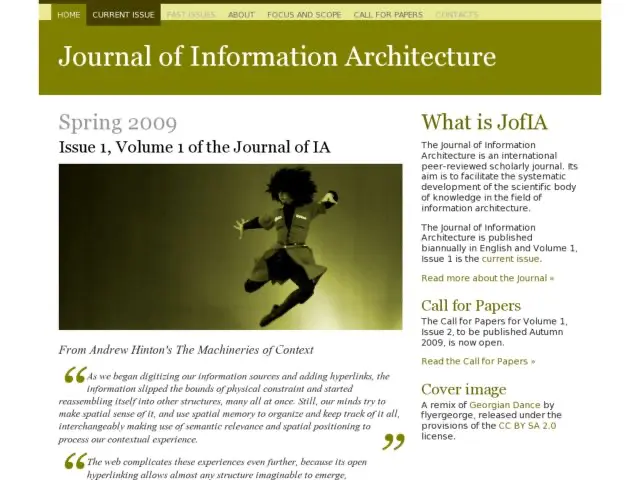
The Journal of Information Architecture is a peer-reviewed scholarly journal, published by the REG-iA (Research and Education Group in Information Architecture), an IAI (Information Architecture Institute) international volunteer initiative started by Andrea Resmini. Its aim is to facilitate the systematic development of the scientific body of knowledge in the field of information architecture. The long term goal of the journal is to serve as a forum for new research and sharing of good ideas and case studies that are useful to the field's researchers, practitioners, students, and all other interested parties.

The first issue, Spring 2009, is now available.

http://journalofia.org/