Blog

Pretty Sketchy Group on Flickr

· Michael Angeles

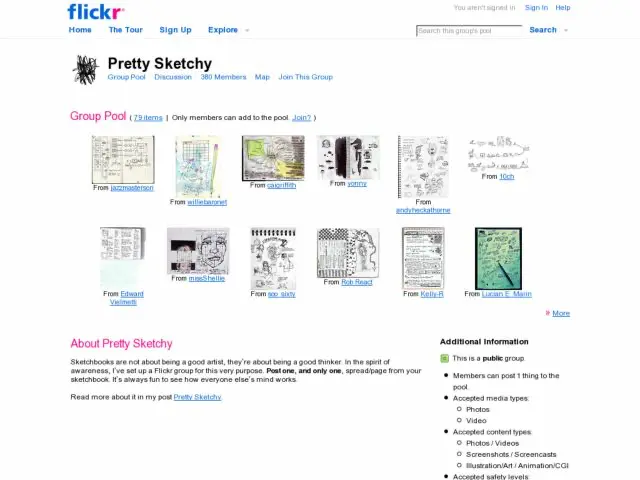
Jason Santa Maria started a sketchbook group on flickr.

Sketchbooks are not about being a good artist, they’re about being a good thinker. In the spirit of awareness, I’ve set up a Flickr group for this very purpose. Post one, and only one, spread/page from your sketchbook. It’s always fun to see how everyone else’s mind works.

Read more about it in Jason's post Pretty Sketchy.

http://www.flickr.com/groups/prettysketchy/

Wireframe and Storyboard Notepads are Back: Now sold via Amazon

· Michael Angeles

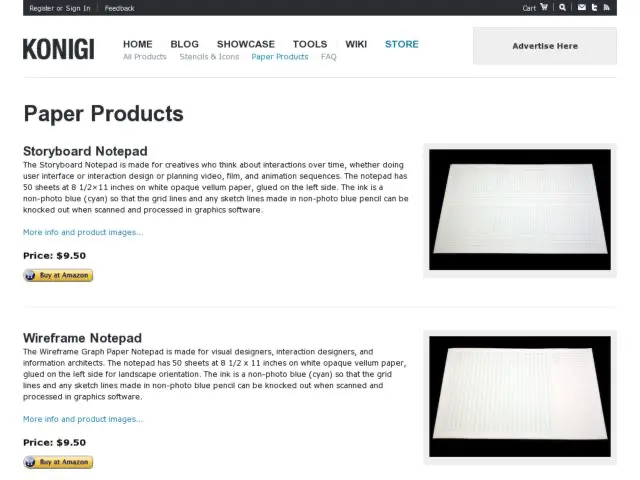
The Wireframe and Storyboard notepads have been reprinted and are now selling exclusively via Amazon.com. The good news is, now that you ordered via Amazon, your order may qualify for Free Super Saver Shipping, and may be combined with other Amazon purchases in your cart. So if you spend $25 at Amazon, even by combining your purchase with other qualified products fulfilled via Amazon, your shipping will be free. Yay, you!

For more info about the note pads, see the product pages in the store.

//konigi.com/store/paper-products

Is Interaction Design a dead-end job?

· Michael Angeles

In the Cooper Journal, Tim McCoy responds to Bill Moggridge's comment after a screening of Objectified. He paraphrases Moggridge as saying interaction design has become pervasive, that anyone and everyone can be an interaction designer, and so the role of professional interaction designer is (or is becoming) unnecessary.

McCoy asks if interaction design is really dead. He goes on to point out a few factors that have allowed developers to build better interfaces without interaction designers. The main point I took away is that the need for the expertise and craft of interaction design is not dead, but the perception that the need for the role seems to be diminished given tools and awareness.

Awareness and tools alone, however, don't breed expertise. Clearly if it did, there'd be a lot less awfully designed stuff out there. Or to take a craft like video editing as an example, we'd see an awful lot more people doing much slicker looking stuff on YouTube.

It's a relevant point to make, however, that the tools and frameworks alone have enabled a lot of work to be done, especially in the building of web sites/apps, without need of an interaction designer. A lot of basic interactions can be implemented with design patterns. But not all needs are satisfied by a pattern, and isolated solutions can be implemented that don't relate to one another, or to the goals of the user. That's not to say that you need an interaction designer to design, but you do have to think of design in terms of the ecosystem, rather than of any solitary role within it. Any user experience designer that isn't doing that isn't worth his weight in business card titles.

http://www.cooper.com/journal/2009/04/is_ixd_a_dead_end_job.html

12 Excellent Examples of Lazy Registration

· Michael Angeles

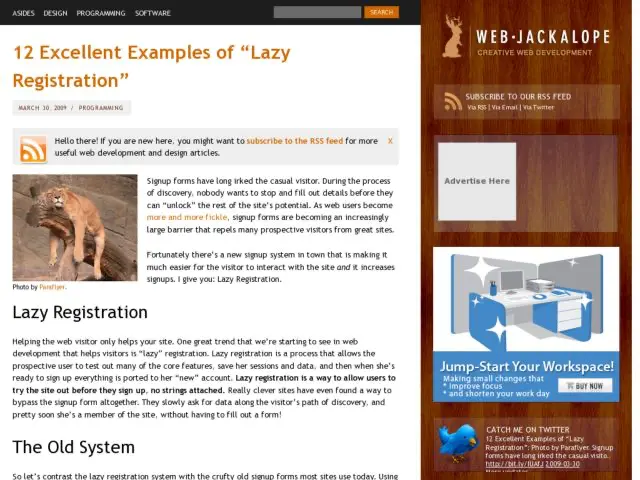
This is a short entry about sites that use "Lazy Registration," or registration/sign up processes that often don't require any information from the user while they try out a site, until they decide to commit to using it. In some cases, sites bypass signup altogether, and in others, users are permitted to register once they've decided to go beyond simply "testing out" a site or application. As noted, the process of "getting your feet wet by trying," most likely leads to more sign ups because of the frictionless experience.

The article includes a collection of examples including StackOverflow and Drop.io. I personally like Soup.io's process as well and might include it among the good examples here. Check out all of the examples.

http://webjackalope.com/lazy-registration/